
SKYHAWK THERAPEUTICS
AN UPSIDE DOWN APPROACH TO CLINICAL TRIALS: LEADING TO SOME EXCITING RESULTS
Skyhawk Therapeutics, a US-based pharmaceutical company, has developed a new medication that aims to slow the progression of Huntington’s Disease. Let’s start from the beginning and go through Skyhawk’s timeline:
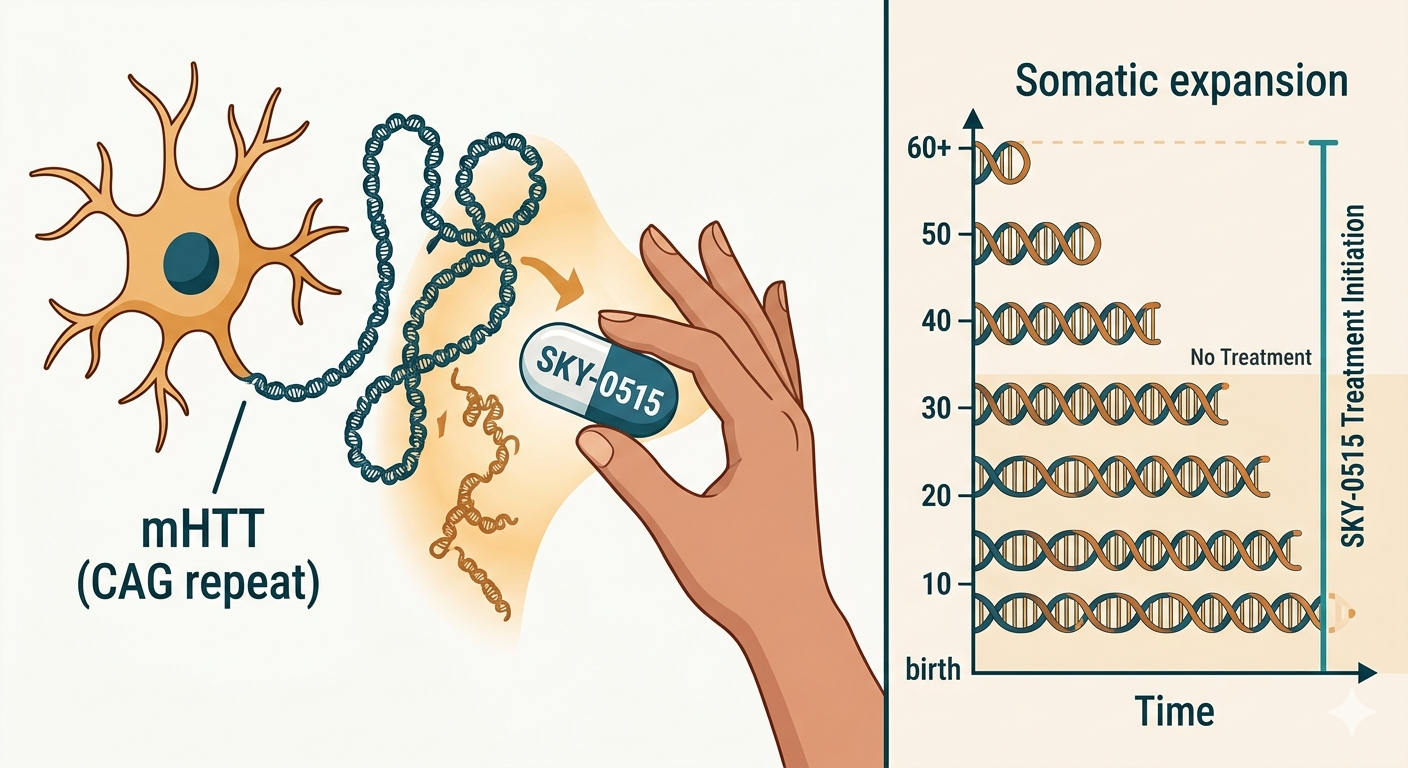
SKY-0515 is taken as a once-daily pill by mouth. It is designed to lower the levels of two harmful proteins linked to HD (Mutant huntingtin(mHTT) and PMS1). You can read more in regards to this approach in our article published September 18, 2025.

1) Huntingtin protein. In people with HD, the huntingtin gene carries a fault (mutation) that causes the body to produce an abnormal version of the huntingtin protein, called mutant huntingtin (mHTT). This abnormal protein is what drives the disease. SKY-0515 lowers levels of both the normal and the mutant form of huntingtin.
2) PMS1 protein. PMS1 plays a role in a process called “somatic expansion.” To understand this: everyone with HD is born with a certain length of genetic repeat in their huntingtin gene, but in some cells — especially brain cells — that repeat gradually gets longer over a person’s lifetime. This lengthening is called somatic expansion, and research suggests it may influence when symptoms first appear. By lowering PMS1, SKY-0515 may help slow this process. Somatic expansion is one of the most actively studied areas in HD research today.
Phase 1 trial
Skyhawk chose to take a different path from other pharmaceutical companies and begin their clinical trials, Down Under, in Australia and New Zealand.
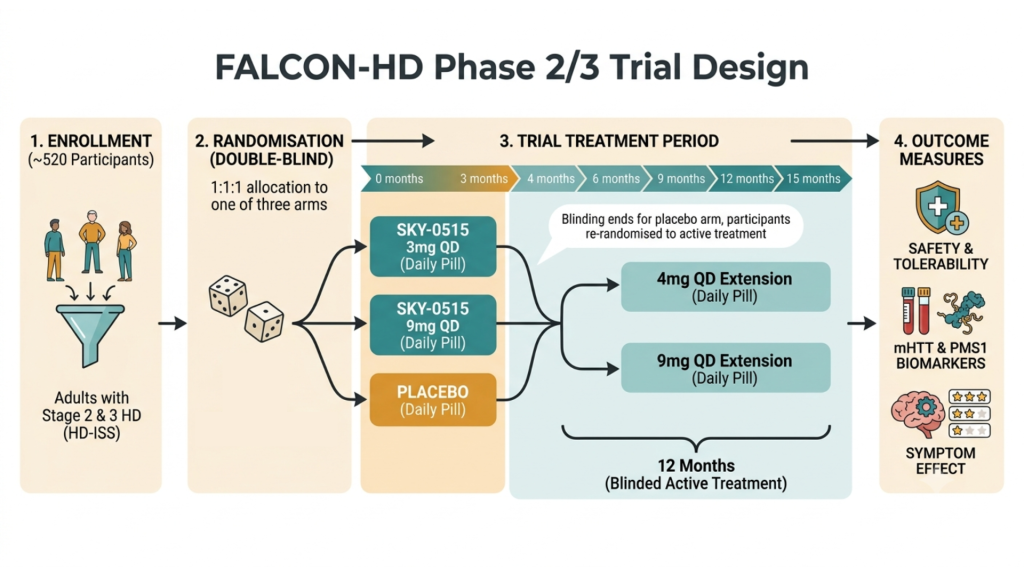
The Phase 1 trial had three parts. Parts A and B enrolled healthy volunteers who do not carry the HD gene mutation. Part C enrolled people living with HD. The main goal was to check that the drug is safe and well tolerated by the body.
On 27 January, Skyhawk announced results from a 9-month interim analysis (a planned look at the data while the trial is still ongoing) of Part C participants in the Phase 1 trial.
Key findings included:
- SKY-0515 was safe and well tolerated.
- Participants taking SKY-0515 showed reductions in mutant huntingtin levels in blood that were “dose-dependent” — meaning the higher dose produced a greater reduction than the lower dose.
- At the higher dose, average reductions of about 62% in mutant huntingtin were seen
- Levels of PMS1 were reduced by about 26%, but there is not yet enough data to know whether this reduction is large enough to meaningfully slow somatic expansion.
- The drug was shown to reach the brain, which is essential for any treatment targeting HD.
Phase 2/3 trial — FALCON-HD
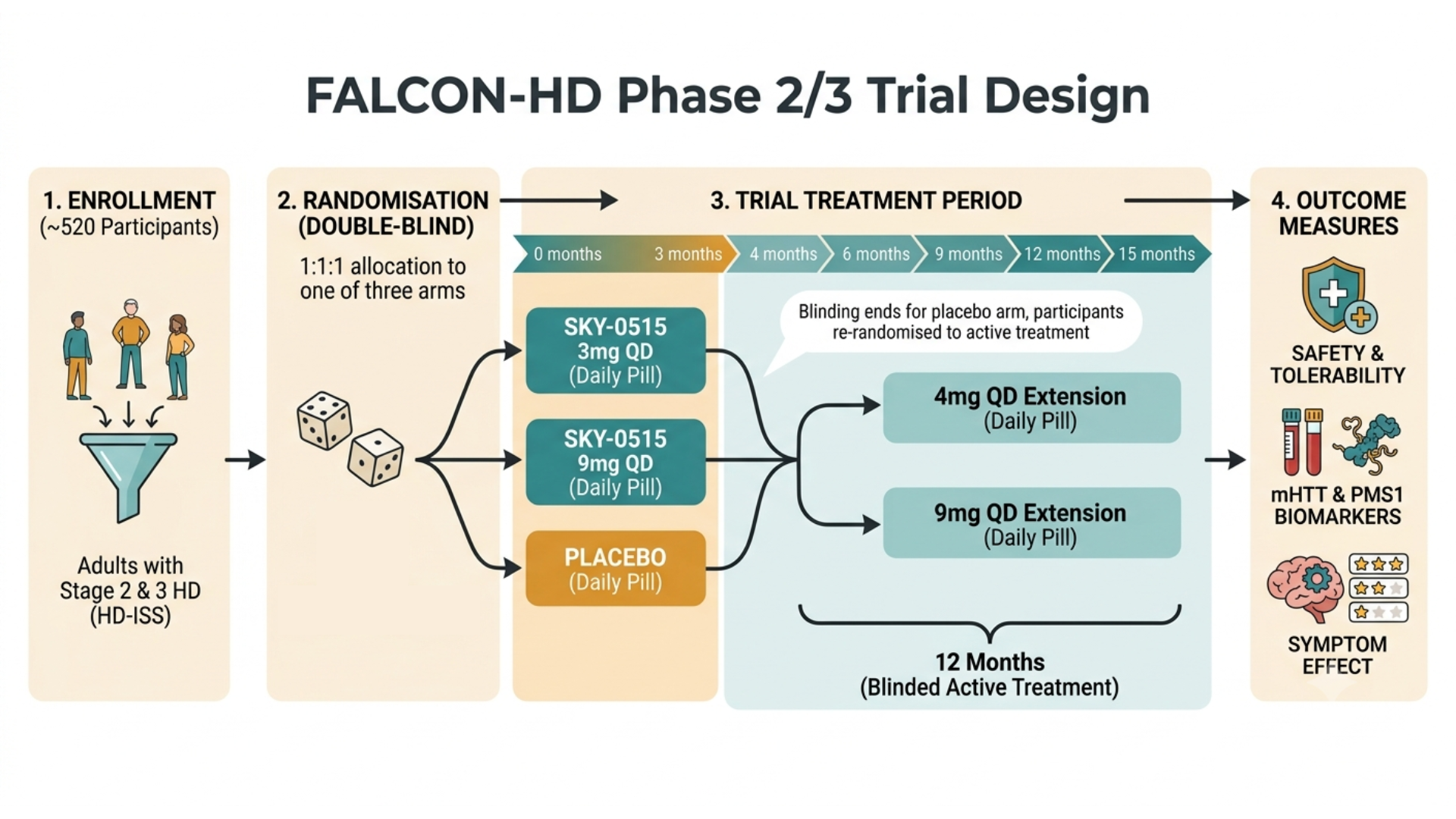
Based on the promising interim results from Phase 1 the company then started a Phase 2/3 trial called FALCON-HD. The company yet again began with sites in Australia and New Zealand. Proceeding with 2 sites in the country of Georgia. A different approach to site selection reflecting a broader global approach to recruitment
As noted by Masoud Mokhtarani, Senior Vice President of Clinical Development, “Based on global feasibility assessments, sites in Georgia were selected due to their strong clinical research infrastructure, access to the target patient population, and limited competition from other ongoing clinical trials.”
The Phase 2/3 trial is designed both to find the best dose and to test whether the drug has a meaningful effect on HD symptoms.
FALCON-HD is enrolling people at stages 2 and 3 of HD, as defined by the HD Integrated Staging System (HD-ISS). This is a newer way of classifying how far HD has progressed, currently used only in clinical trials rather than in everyday medical practice. The trial aims to enrol around 520 participants in total. Each participant is randomly assigned to receive either SKY-0515 (at one of three different dose levels) or a placebo, The drug is taken as a once-daily pill for at least 12 months.
As well as continuing to monitor safety, FALCON-HD is designed to measure whether SKY-0515 has a meaningful effect on the signs and symptoms of HD. Researchers are also tracking biological markers to see whether the drug affects levels of huntingtin and PMS1 proteins in the body.
Provisional approval pathway in Australia
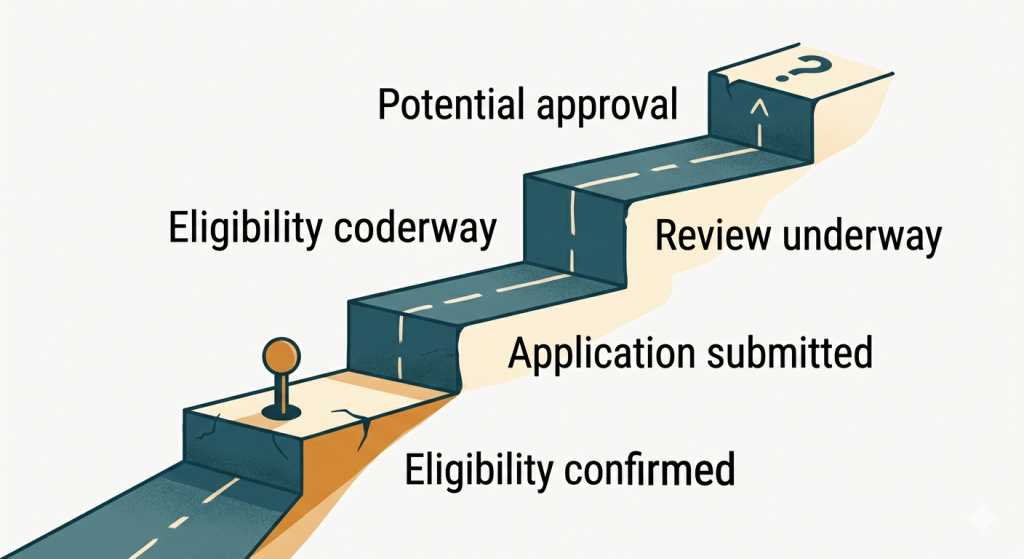
On 3 March, Skyhawk announced that Australia’s Therapeutic Goods Administration (TGA) — the Australian equivalent of the EMA or FDA — has determined that SKY-0515 meets the eligibility criteria for its “provisional approval” pathway. This is a regulatory route that can allow earlier access to a promising medicine based on preliminary clinical data, before full Phase 3 trials are completed. Skyhawk is in the process of submitting a formal application to the TGA. It is important to note that this milestone does not guarantee that the drug will be approved or made available — it simply means the process for an early review has begun.
On June 1st, Skyhawk announced results from a 12-month interim analysis from the Phase 1 trial providing further insights into the potential of SKY-0515 (press release).
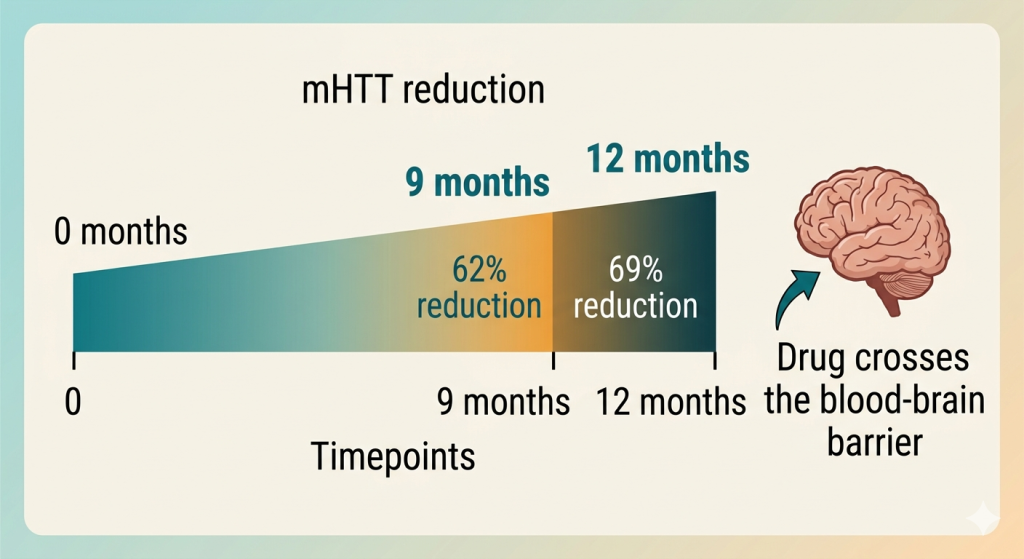
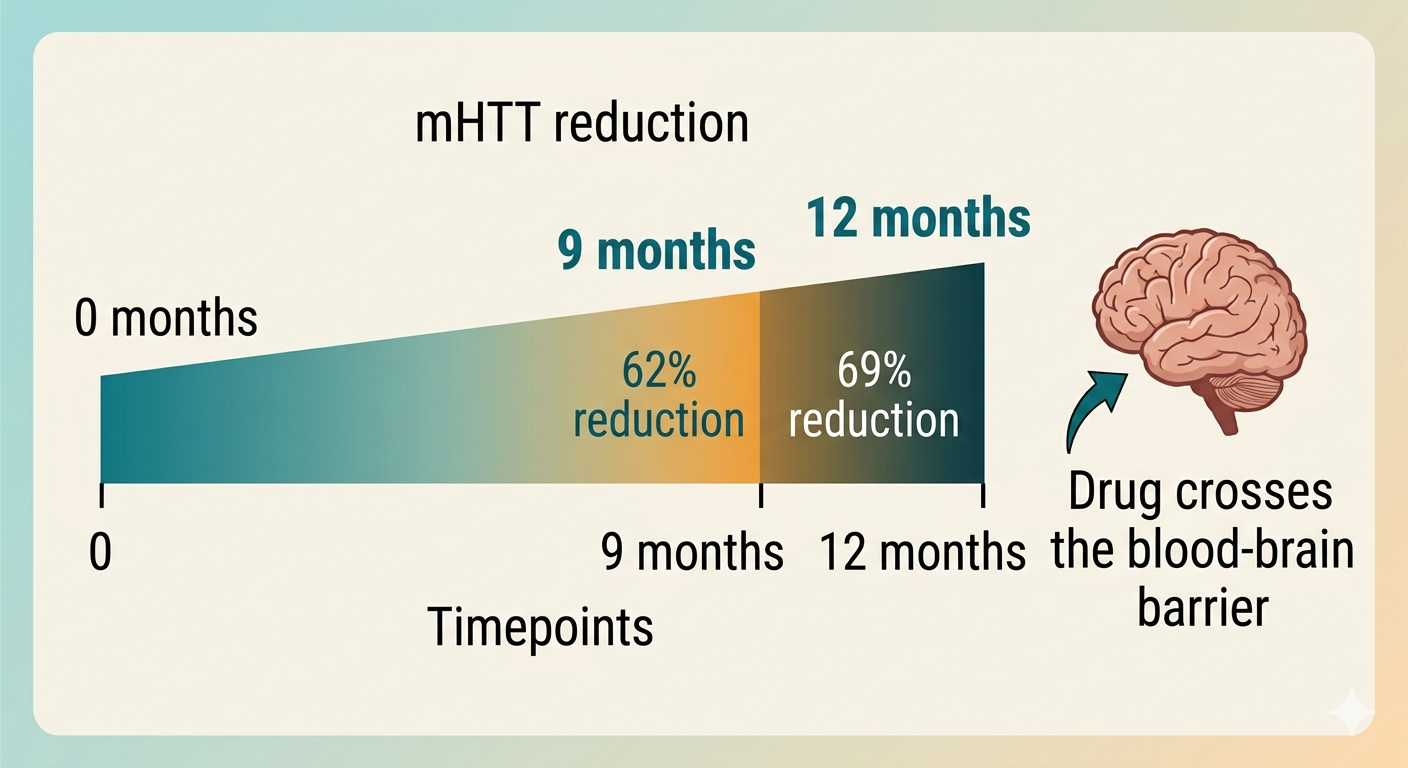
- As with the 9 months results treatment resulted in a dose-dependent reduction in mutant huntingtin(mHTT) protein in blood of up to to 69% – the largest reduction reported so far in any HD clinical trial
- Reductions on PMS1 mRNA of up to 26%
- At 3, 6, 9, 12 months, participants demonstrated positive mean changes from baseline Composite Unified Huntington’s Disease Rating Scale(cUHDRS).
- Favourable trends were also observed across all cUHDRS subcomponents, including Total Motor Score, Total Functional Capacity, Symbol Digit Modalities Test and Stroop Word Reading Test.
- The Company also announced that the Australia and New Zealand portion of its Phase 2/3 FALCON-HD trial completed enrolment 6 months ahead of schedule with 144 patients enrolled
- The worldwide Phase 2/3 FALCON-HD trial has expanded to 8 countries
Looking ahead
Although still in development, SKY-0515 and the FALCON-HD trial represent an important step forward in the search for disease-modifying therapies for Huntington’s disease.
This study brings new hope for the HD community as researchers continue to explore treatments that target the underlying biology of the disease.
More details are available at Clinical Trial NCT07378644 and www.falcon-hd.com.
Read the full press release here.
– Article written by Dina de Sousa
– Illustrations by EHA Communication Team
